
When you are building a custom rock crawler or upgrading a one-ton truck, the weakest link in your suspension usually isn't the control arm tubing—it's the joint at the end of it. Whether you are fabricating a custom 4-link suspension or dialing in a Dana 60 crossover steering setup, the hardware you choose dictates how your rig handles, articulates, and survives on the trail.
For serious fabricators and off-road enthusiasts, the 1.25 inch heim joint has become the gold standard. It offers massive load-bearing capacity, smooth articulation, and the durability needed to handle massive tires and high-horsepower drivetrains. But not all rod ends are created equal. Understanding the materials, static load ratings, and proper maintenance of these joints is critical for building a rig that drives as well on the highway as it performs on the rocks.
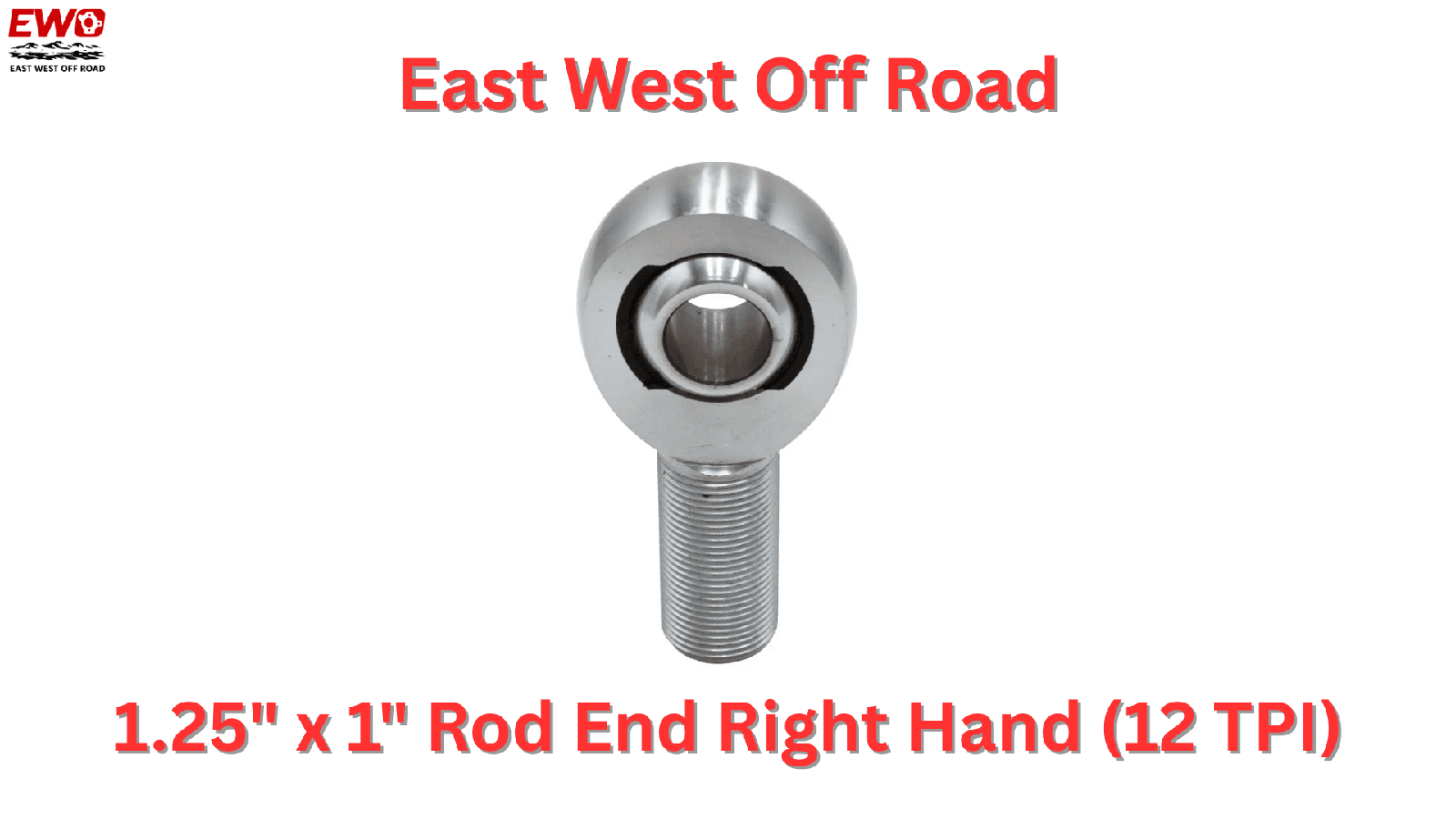
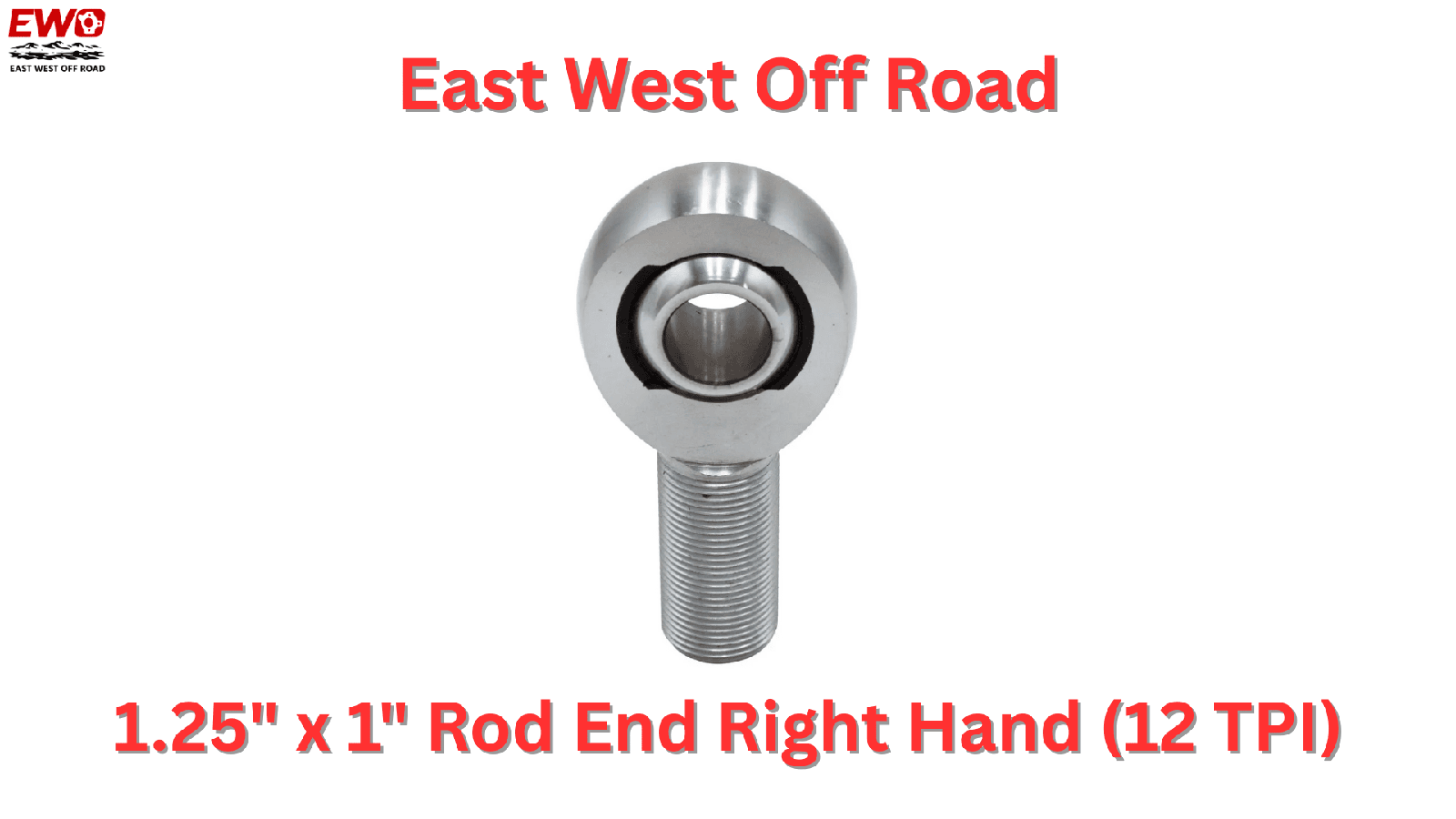
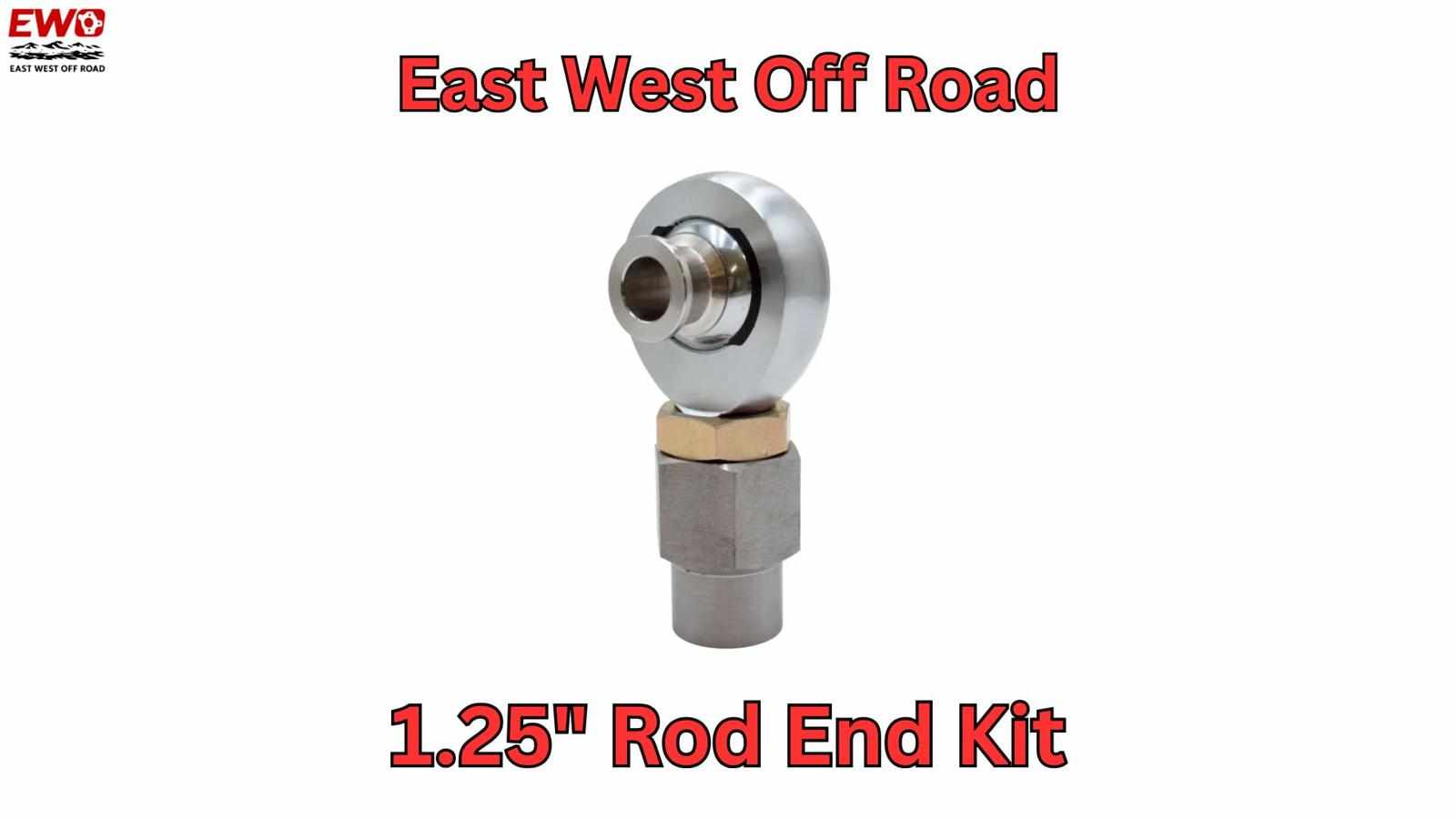
In this guide, we break down everything you need to know about heavy-duty rod ends and why the 1.25" x 1" Rod End Right Hand (12 tpi) is the trusted option for serious off-road setups.
What Is a 1.25 Inch Heim Joint and Why It’s Used in Off-Road Builds
A heim joint, also known technically as a rod end bearing, is a mechanical articulating joint used on the ends of control arms, steering links, and track bars. Unlike a rubber or polyurethane bushing that resists movement, a heim joint allows for a high degree of misalignment. This means your suspension can cycle through its full range of motion without binding, which is essential for rock crawling and high-speed desert racing.
The designation "1.25 inch" refers to the shank diameter and thread size of the joint. In the world of off-road fabrication, size equals strength. While smaller joints (like 3/4-inch or 7/8-inch) are suitable for lighter vehicles or UTVs, full-size trucks and dedicated crawlers require the massive structural integrity of a 1.25-inch shank.
Builders choose these joints because they eliminate the "slop" associated with worn-out rubber bushings and provide a direct, solid connection between suspension components. This results in tighter steering response and more predictable handling, even when navigating boulder fields.
Key Specifications of a 1.25" x 1" Right-Hand Heim Joint (12 TPI)
If you are looking for the ultimate in strength, you need to look at the numbers. A high-quality 1.25 inch heim joint isn't just a chunk of metal; it is a precision-engineered component. Specifically, the 1.25" x 1" Rod End Right Hand (12 tpi) offers a set of specs designed to handle extreme abuse.
76,200 lb Static Load Explanation
The most critical number you will see on a spec sheet is the radial static load rating. This specific joint boasts a massive 76,200 lb static load rating. This number represents the amount of force the joint can withstand before it deforms or fails structurally. To put that in perspective, that is enough strength to suspend almost ten fully built Jeep Wranglers from a single joint. In dynamic off-road scenarios—where shock loads occur instantly as you hit a ledge or land a jump—this high overhead ensures the joint won't snap under pressure.
1 Inch Bore Strength Advantage
While the shank is 1.25 inches, the "bore" (the hole through the ball) is 1 inch. This allows you to use massive 1-inch Grade 8 bolts for mounting. Many factory suspension bolts are 14mm or 9/16-inch, which can shear under heavy torque. upgrading to a 1-inch bore ensures your mounting hardware is as strong as the joint itself.
Chromoly Heat Treatment
Standard mild steel is fine for body mounts, but not for suspension links. These rod ends are manufactured from 4130 Chromoly steel. This alloy is significantly stronger and lighter than standard carbon steel. Furthermore, the body is heat-treated, a process that hardens the metal to resist wear and fatigue over years of abuse.
52100 Steel Bearing
The ball inside the joint is made from 52100 bearing steel. This is a high-carbon chromium alloy known for its hardness and resistance to deformation. A hard ball ensures smooth rotation and prevents the joint from developing play or "slop" quickly.
Teflon-Lined Race Benefits
Inside the race (the area holding the ball), there is a Teflon liner. This serves two purposes: it makes the joint self-lubricating, reducing maintenance, and it acts as a wiper to keep dirt out of the bearing surface. A tight Teflon liner keeps the joint quiet and extends its lifespan significantly compared to metal-on-metal industrial joints.
Why Heat-Treated Chromoly Heim Joints Outperform Standard Rod Ends
When browsing for parts, you might see cheaper "agricultural" or "industrial" rod ends. These are often made of mild steel and lack a Teflon liner. While they might look similar, they are dangerous for automotive use.
A chromoly rod end 1.25 inch unit is designed to handle shock. Off-roading is violent. When your tire impacts a rock, that force travels through the tie rod directly into the heim joint. Mild steel is ductile; it may bend or stretch under that impact. Heat-treated chromoly, however, has a much higher yield strength. It returns to its original shape after stress rather than deforming permanently.
Furthermore, standard rod ends often become loose very quickly. Once a joint has play, it creates a hammering effect every time you accelerate or brake, which can oval out your mounting holes and destroy your brackets. Investing in high-quality chromoly joints upfront saves you from constantly replacing cheap, rattling parts later.
Common Applications for Heavy-Duty 1.25 Heim Joints
The 1.25-12 right hand thread heim joint is incredibly versatile. It serves as the cornerstone for many heavy-duty fabrication projects.
Rock Crawlers
In rock crawling, articulation is king. Rubber bushings bind up when a suspension arm drops 14 or 16 inches. A heim joint allows the axle to twist and droop without restriction, keeping your tires on the ground for maximum traction.
Dana 60 Crossover Steering
If you are swapping a Dana 60 axle into a truck, factory steering linkage often won't fit or isn't strong enough. Builders use 1.25 inch heims to fabricate custom drag links that correct steering geometry and eliminate bump steer.
1-Ton Steering Kits
For trucks running 40-inch tires or larger, stock tie rod ends are a liability. A heavy duty 1 ton steering kit utilizing 1.25 inch heims provides the confidence that you won't snap a tie rod in the middle of a trail.
4-Link Suspension Systems
Custom 4-link setups on the rear of trucks or Jeeps require joints that can handle immense push-pull forces. These joints are standard for lower control arms in 4-link systems because they take the brunt of the driving force.
Track Bars
The track bar centers the axle under the vehicle. If this joint fails or has play, you get the dreaded "Death Wobble." A 1.25 heim joint offers the rigidity needed to keep the axle perfectly centered, stabilizing the vehicle at highway speeds.
High Steer Kits
Lifting a vehicle changes the angle of the drag link. High steer kits move the steering linkage higher up on the knuckle to flatten that angle. Fabricators use these rod ends to build custom length links that clear differential covers and leaf springs.
Axle Swaps
Putting a Ford Super Duty axle under a Jeep or Chevy? You will need custom links to make it work. The 1.25 heim joint is the go-to problem solver for connecting mismatched drivetrain components.
Racing & Mega Truck Suspension
Mega trucks and bouncers exert wild forces on their suspension. The 76,200 lb static load rod end capability is mandatory here to prevent catastrophic failure upon landing jumps.
1.25 Heim Joint vs Tie Rod End – Which One Should You Choose?
This is a common debate among builders: 1.25 heim joint vs tie rod end.
Traditional automotive Tie Rod Ends (TREs) are sealed and greasable. They are great for daily drivers because they are maintenance-free for a long time and resist road salt well. However, they have a limited range of motion. If you flex your suspension too far, you can snap the stud off a TRE.
Heim joints are stronger and offer significantly more misalignment (angular movement). If you are building a rig that sees serious trail time, or has a long-travel suspension, the heim joint is the superior choice. While they may require slightly more attention than a sealed TRE, the trade-off in strength and performance is well worth it for any modified vehicle.
How to Choose the Right Jam Nuts, Tube Adapters & Spacers for a 1.25 Heim Joint
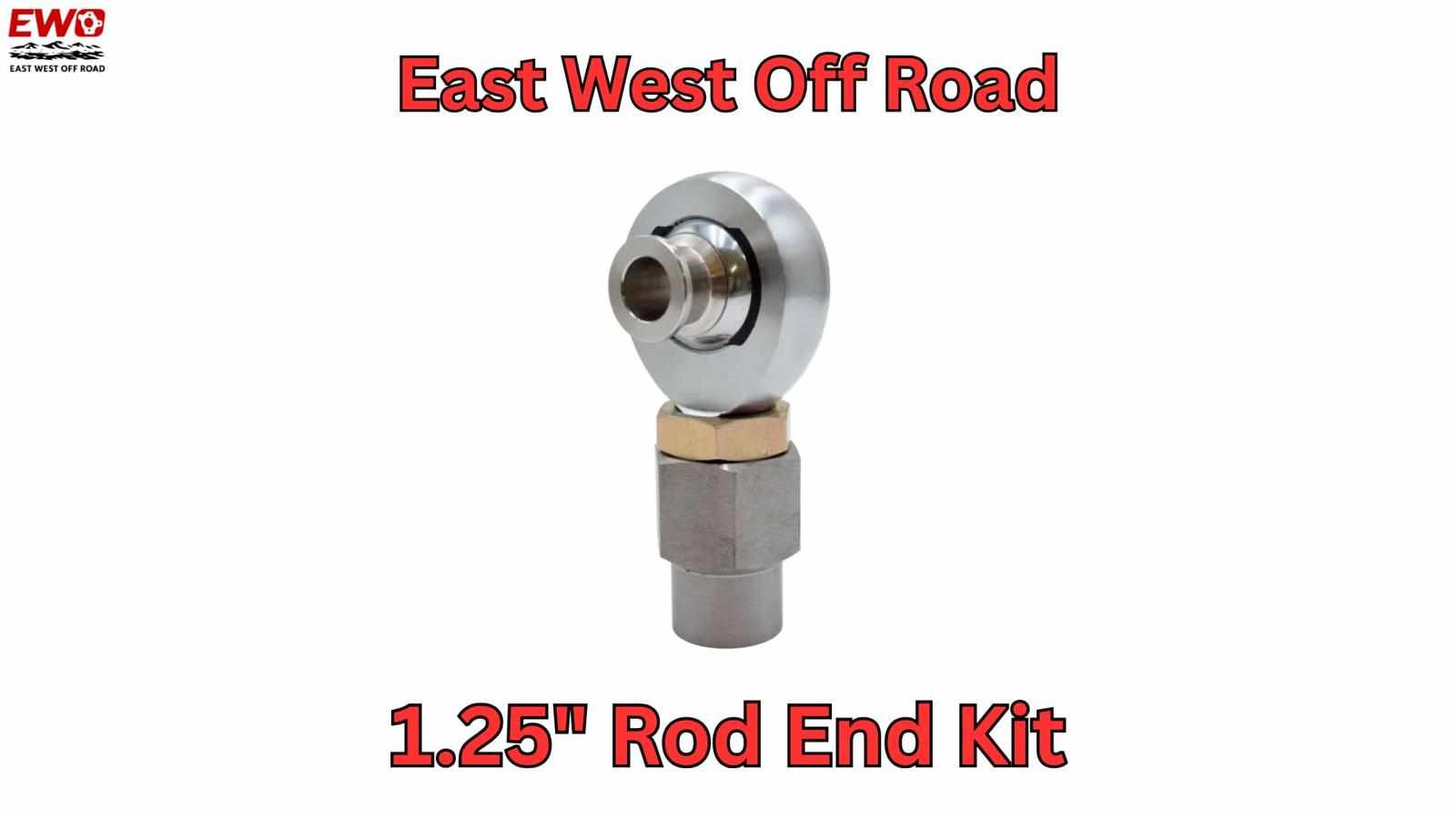
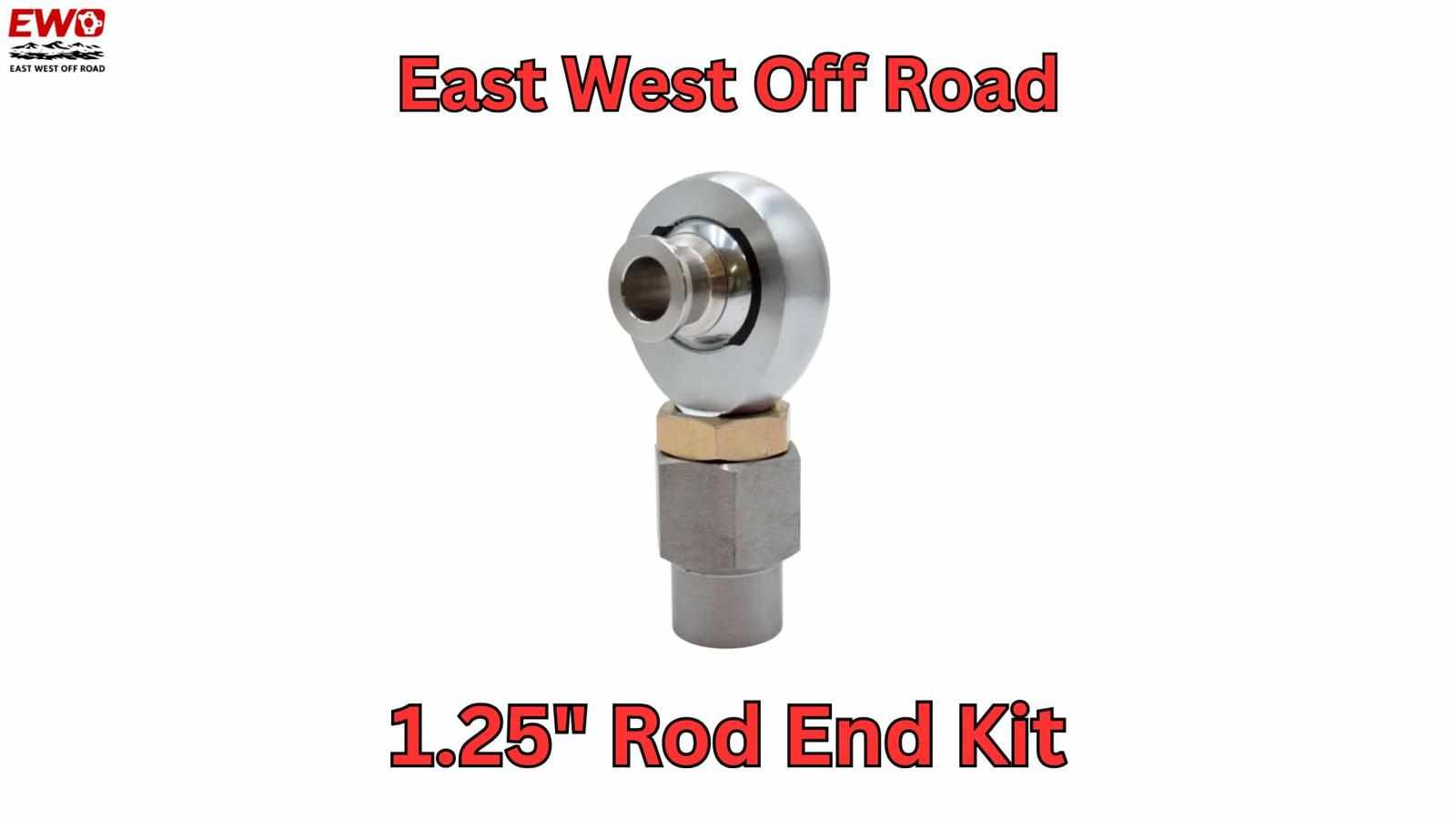
You can't install a heim joint by itself. You need a complete system.
Tube Adapters (Bungs): To attach the heim to your tubing, you need a 1.25 heim joint tube adapter. These weld into the end of your DOM tubing. Ensure you match the thread pitch (12 TPI) and direction (Right Hand vs. Left Hand) correctly.
Jam Nuts: A 1.25 heim joint jam nut is critical for safety. It locks the heim joint against the tube adapter so it doesn't vibrate loose. Always use a high-quality steel jam nut and check it regularly.
Misalignment Spacers: A 1.25 inch heim usually has a 1-inch bore. However, you might want to use a 3/4-inch or 5/8-inch bolt. 1.25 heim joint spacers (or high misalignment spacers) reduce the bolt hole size while allowing the ball to rotate further before the body of the joint hits the mounting bracket. This is crucial for maximizing suspension travel.
Maintenance Tips for Long-Lasting Heim Joint Performance
One myth about heim joints is that they are noisy and wear out instantly. This usually only happens with low-quality joints or poor maintenance. With the right care, a high-quality teflon lined heim joint 1.25 unit can last for years.
The Lubrication Rule
Because these joints are Teflon-lined, they are self-lubricating. However, keeping the ball clean helps extend life. We recommend using a dry lubricant like Tri-Flow. It penetrates the race, cleans out debris, and leaves a film that doesn't attract dust.
Why WD-40 Should Be Avoided
Do not use standard WD-40 or heavy grease on Teflon-lined heims. WD-40 attracts dirt and turns into a grinding paste that eats away the Teflon liner. Heavy grease can't penetrate the tight tolerances of a quality race and just sits on the outside collecting grit. Stick to dry lubricants designed for PTFE liners.
Why Buy USA-Made Heim Joints from East West Offroad
When you are barreling down a washboard road or crawling up a waterfall, you need to trust your hardware. Not all parts are created with the same quality control. Cheap import rod ends often suffer from inconsistent heat treating or loose manufacturing tolerances, leading to premature failure.
At East West Offroad, we prioritize components that real fabricators use. Our 1.25" x 1" Rod End Right Hand (12 tpi) is an ideal choice for builders who refuse to compromise on safety. We ensure:
Strict Quality Control: Consistent threading and bore sizing.
Verified Materials: Real 4130 Chromoly and 52100 bearing steel.
Off-Road Focus: Parts designed specifically for the stresses of suspension geometry.
When you buy from us, you are getting a product backed by knowledge and experience in the dirt. You can view the full specs and add this joint to your build list here: 1.25" x 1" Rod End Right Hand (12 tpi).
Buying Guide – Is This 1.25" x 1" Right-Hand Heim Joint Right for Your Build?
If you are fabricating a heavy-duty link or steering system, you need a starting point. This specific Right-Hand thread joint is typically used on one end of a link, while a Left-Hand thread joint is used on the other. This allows you to adjust the length of the link (to center an axle or align steering) without removing it from the vehicle—simply loosen the jam nuts and rotate the tube.
This joint is for you if:
You are building a 4-link, 3-link, or radius arm suspension.
You are upgrading steering on a 1-ton axle (Dana 60, Sterling 10.5, 14 Bolt).
You need a 1.25 heim joint dimensions compliant part for a custom track bar.
You value strength and safety over saving a few dollars on inferior steel.
Don't let a $20 part cost you thousands in trail repairs. Equip your rig with the hardware capable of handling the abuse.
Ready to upgrade your suspension?
Grab your 1.25" x 1" Rod End Right Hand (12 tpi) today and build with confidence.
FAQ Section
What does 76,200 lb static load mean in real-world off-road use?
In the real world, "static load" is a safety margin. While your truck doesn't weigh 76,000 lbs, hitting a rock at speed generates dynamic forces that spike incredibly high, momentarily multiplying the weight of your vehicle. A 76,200 lb rating ensures the joint can absorb these violent shock loads without snapping, keeping your suspension intact when you need it most.
Are 1.25 heim joints good for daily-driven off-road trucks?
Yes, provided they are quality, Teflon-lined joints like the ones from East West Offroad. While they transmit slightly more road vibration than rubber bushings, the steering precision they offer is unmatched. For daily drivers, regular inspection and occasional cleaning with Tri-Flow will keep them quiet and tight for a long time.
What vehicles use 1.25-12 right-hand heim joints?
These joints are most commonly found on custom builds and heavy-duty trucks. This includes Jeep Wranglers with 1-ton axle swaps, Ford Super Duty trucks with custom steering, dedicated rock buggies, tube chassis crawlers, and mega trucks. They are the standard size for lower control arms and heavy-duty tie rods.
Can this heim joint be used in steering and suspension?
Absolutely. The 1.25-inch joint is versatile enough for both. It is frequently used for drag links and tie rods in steering systems, as well as control arms and track bars in suspension systems. Its high load rating makes it safe for any of these applications.
How often should a teflon-lined heim joint be lubricated?
Teflon-lined joints are technically self-lubricating, but maintenance depends on your environment. If you drive in dry, dusty conditions or mud, inspect them after every few trips. A quick spray of dry lubricant (Tri-Flow) helps flush out contaminants. Avoid over-lubricating with sticky greases that trap dirt.
Is a chromoly heim joint better than a standard steel rod end?
Yes. Chromoly (Chromium-Molybdenum steel) has a much higher strength-to-weight ratio and tensile strength than standard mild steel. For suspension parts that undergo cyclic stress and shock loading, chromoly is far superior because it resists bending and fatigue, ensuring your suspension stays straight and safe.

Write a comment ...